
File import and export
Status: a design, not built. This page says how the kit intends to process a large file in the background, on the pieces it already has: the job queue, the file storage and the process managers. No generator, port or package of this version implements it; what would be added is named under "What would be added".
Summary. Importing a spreadsheet of ten thousand rows, or exporting the agenda of a year, is work a use case hands to a worker. The file never goes through the database and never sits whole in memory: an import reads the stored file as a stream and turns it into commands, one batch of rows per unit of work, with its progress and a checkpoint after each batch; an export reads a search page by page and writes the file in parts to the storage. Each run is one background job, retried, observable and resumable; a very large file is split into chunks run by several jobs and followed by a process manager.
Import
Section titled “Import”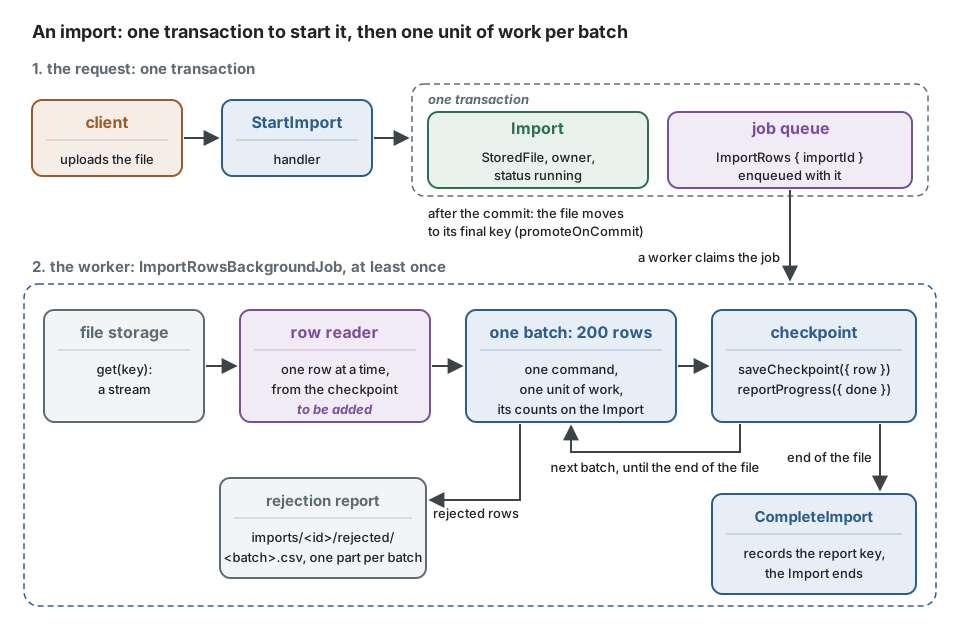
- Receiving. The file arrives as any other: a
FileUploadthe bus stages and scans before the transaction, or a direct upload confirmed from itsPendingUploadfor a large one.FileScanneris where a policy on the format lives (a CSV of at most 50 MB, a single sheet). - Starting. The handler of
StartImportrecords anImportaggregate with theStoredFile, its owner and its status, and enqueuesImportRowsBackgroundJobwith the identifier of the import as its whole payload. Both commit together, so an import exists with its job or not at all; the client gets the identifier and follows it. - Reading. The job opens
FileStorage.get(key)and hands the stream to a row reader that yields one row at a time. It never loads the file: memory stays at one batch. - Writing. Rows are validated against the input of the use case they feed, then sent as
one command per batch of, say, 200 rows: the bus runs a command in one unit of work, so a
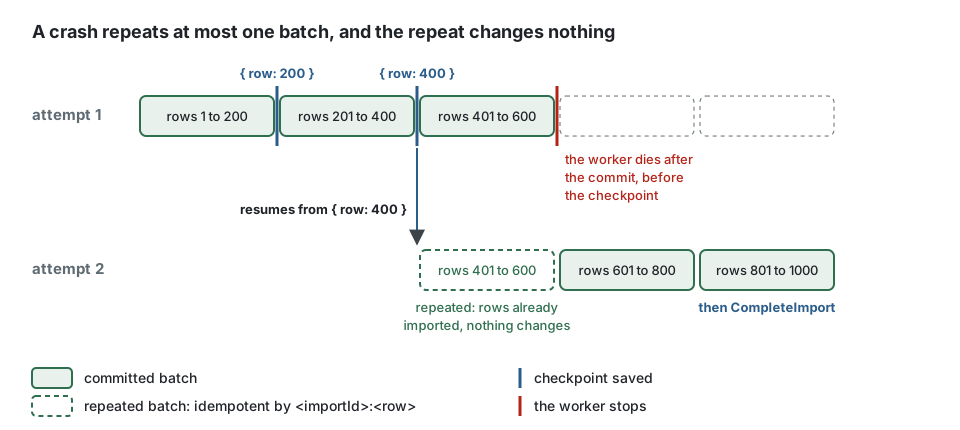
batch commits or rolls back whole and a crash repeats at most one batch. Each row is
idempotent by a key derived from the import and the row (
<importId>:<row>), kept by the use case (a unique constraint, or the processed-key store), so that a repeated batch changes nothing. The handler of that command records the counts of the batch on theImportin the same unit of work, keyed by the batch, so that a repeated batch replaces its counts instead of adding them twice. - Resuming. After each batch the job saves
{ row }as its checkpoint (the counts are already committed with the batch, so they cannot drift from what was imported) and reports{ done: row }(andtotalonce a first pass counted the rows, or the bytes read against the size when it did not). A retry, an expired lease or a stop of the worker resumes from the checkpoint: the stream is opened again and skips to the row, or, once the port offers it, reads from a byte offset. - Rejecting. A row that fails validation or a business rule is not an error of the job: it
is counted and written to the rejection report with its row number, its column and the code
of the refusal. The report is a file of its own: written in parts during the run
(
imports/<id>/rejected/<batch>.csv, eachputonce per batch, so a repeated batch overwrites its own part) and joined at the end into one file offered through a signed link. - Ending. The job sends
CompleteImport: theImportaggregate, which already holds the counts, records the key of the joined report and ends, and its integration event tells whoever waits (a notification to the person who uploaded). A job that dies after its last attempt leaves the importrunningwith its checkpoint: an operator revives the job (retryDead), nothing is lost.
The job, on the pieces that exist
Section titled “The job, on the pieces that exist”Everything below compiles against the kit today except the row reader, which is declared here because it is the first piece of What would be added. The payload is the identifier of the import, the checkpoint the last row committed.
import {  AuthorizedCommand,  FileStorage,  type Actor,  type BackgroundJob,  type BackgroundJobExecution,  type CommandBus,} from '@ddd-ts-kit/kernel';import { Background } from '@ddd-ts-kit/kernel/declarations';import type { Readable } from 'node:stream';
// Not in the kit yet: a streaming reader that yields one row at a time from a row number.interface Row {  readonly number: number;  readonly cells: Readonly<Record<string, string>>;}declare function readRows(stream: Readable, options: { readonly from: number }): AsyncIterable<Row>;
// The use cases of the context the import feeds (generated as any command). The handler of// ImportPatientRows imports the valid rows idempotently by <importId>:<row>, records the counts// of the batch on the Import, and writes the rejected rows to imports/<id>/rejected/<batch>.csv.declare class ImportPatientRows extends AuthorizedCommand {  constructor(actor: Actor, importId: string, rows: readonly Row[]);}declare class CompleteImport extends AuthorizedCommand {  constructor(actor: Actor, importId: string);}
/** What the job reads of the Import aggregate: the key of its stored file. */export abstract class ImportFiles {  abstract keyOf(importId: string): Promise<string>;}
export interface ImportRowsPayload {  readonly importId: string;}
interface ImportRowsCheckpoint {  readonly row: number;}
const BATCH_SIZE = 200;
@Background({ timeout: '30m', lease: '1m' })export class ImportRowsBackgroundJob implements BackgroundJob<ImportRowsPayload> {  static readonly jobName = 'patients.import-rows';
  constructor(    private readonly storage: FileStorage,    private readonly imports: ImportFiles,    private readonly commands: CommandBus,  ) {}
  async run({ importId }: ImportRowsPayload, execution: BackgroundJobExecution): Promise<void> {    const content = await this.storage.get(await this.imports.keyOf(importId));
    if (content === undefined) {      throw new Error(`The file of import ${importId} is gone.`);    }
    let batch: Row[] = [];
    for await (const row of readRows(content.stream, { from: rowOf(execution.checkpoint) + 1 })) {      batch.push(row);
      if (batch.length === BATCH_SIZE) {        await this.importBatch(importId, batch, execution);        batch = [];      }    }
    if (batch.length > 0) {      await this.importBatch(importId, batch, execution);    }
    await this.commands.execute(new CompleteImport(execution.actor, importId));  }
  /** One command, one unit of work: the batch commits whole, then the checkpoint moves past it. */  private async importBatch(importId: string, batch: readonly Row[], execution: BackgroundJobExecution): Promise<void> {    execution.signal.throwIfAborted();    await this.commands.execute(new ImportPatientRows(execution.actor, importId, batch));
    const checkpoint: ImportRowsCheckpoint = { row: batch[batch.length - 1]?.number ?? 0 };
    await execution.saveCheckpoint(checkpoint);    await execution.reportProgress({ done: checkpoint.row });  }}
function rowOf(checkpoint: unknown): number {  return typeof checkpoint === 'object' && checkpoint !== null && 'row' in checkpoint && typeof checkpoint.row === 'number'    ? checkpoint.row    : 0;}
The commands are sent as execution.actor, the person who uploaded the file, so each batch is
authorized and audited as theirs. A crash between the commit of a batch and its checkpoint
repeats that batch on the next attempt, which is why ImportPatientRows keeps each row
idempotent by <importId>:<row>:
Export
Section titled “Export”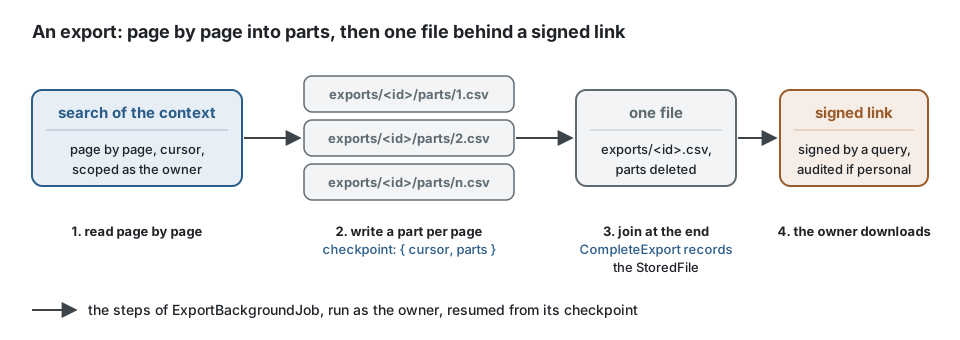
RequestExportrecords anExportwith its criteria and its owner, and enqueuesExportBackgroundJob. The criteria are those of a search of the context, scoped by the access of the owner when the job runs, since it runs as that actor.- The job reads the search page by page with a cursor, never an offset, and writes each page as
a part,
exports/<id>/parts/<n>.csv: an object store cannot append, and a part written twice is the same part. The checkpoint is the cursor and the number of parts. - At the end the parts are joined into the file (a multipart upload of the object store, or a
copy into one key), the parts are deleted, and
CompleteExportrecords theStoredFile. The owner downloads it through a signed link that a query signs, audited when the data is personal. - Exports are kept for a while and purged by a scheduled job (
purgeFinishedof the queue for the jobs, a lifecycle rule or a listing ofexports/for the files).
Very large files
Section titled “Very large files”One job per file holds one worker for the whole file. Beyond what one attempt can do inside its
timeout, the import splits: a first job counts the rows and enqueues one job per chunk of rows
({ importId, from, to }), and a process manager keyed by the import counts the chunks done
from their events and completes the import when all are. The chunks run concurrently, up to the
concurrency of the queue of the context, and each resumes from its own checkpoint. Order between
rows is then lost: a file whose rows depend on each other (a row that refers to an earlier one)
stays one job.
What travels with the job
Section titled “What travels with the job”The job runs as the actor that started the import or asked for the export, in its tenant and
its correlation, so every command it sends is authorized as that person and audited under one
correlation with the request that started it. Keys come from FileKeys, under the tenant of
the work; the report and the export are files of that tenant. The job is enqueued with the
import as its subject and the file as its idempotency key (scoped by the tenant by the queue):
the query that shows the progress of an import checks the subject, as the clearance of the
example does, and a second upload of the same file within one tenant answers the import already
running. The actor is the one of the upload, captured then: a right revoked during a long import
still applies to its last batches.
What would be added
Section titled “What would be added”| Piece | Where | Why |
|---|---|---|
| A row reader and a row writer (CSV first, XLSX behind an optional peer) | a new package, or a subpath of an existing one | streaming parse and write, encoding detection, quoting, a maximum row size |
FileStorage.get(key, { from }) |
the port and its connectors | resume an import at a byte offset instead of skipping rows |
A join of parts (compose(keys, into)) |
the port, as a multipart upload on S3 and a concatenation on the local directory | build an export or a report from its parts |
generate import <context> <Name> --command <UseCase> |
the CLI | the aggregate, the job, the report and their specs, as generate background-job does for one command |
| A contract suite for imports | @ddd-ts-kit/testing |
a crash between two batches repeats one batch and changes nothing |
Limits
Section titled “Limits”- At least once, per batch. A batch is repeated when its worker dies after the commit and before the checkpoint: the commands of an import are idempotent, or the import is not safe.
- No transaction around the whole file. An import is a sequence of committed batches: a
file half imported is a normal, visible state (
running,{ done: 4200 }). A use case that needs all or nothing validates the whole file first, in a dry run that sends nothing, then imports. - One worker per job. Concurrency comes from chunks, at the price of the order.
- Formats are a policy. A format the row reader does not know is refused at the scan, not half read.