
@ddd-ts-kit/prisma
Prisma adapters of the kernel and events ports: a unit of work that repositories never see,
the transactional outbox store, the processed-event store, the read models of projections and
the translation of criteria, the event store, and the models of their tables as a schema
fragment to copy. Same pieces as @ddd-ts-kit/drizzle, for projects on Prisma.
npm i @ddd-ts-kit/prisma @prisma/client @prisma/adapter-pgnpm i -D prismaThe package imports no Prisma code: it is typed structurally against the few methods it calls,
so it works with your generated client, wherever you generate it, and with an extended client
($extends). PostgreSQL first; see Dialect coverage for MySQL and SQLite.
Where it sits in an application
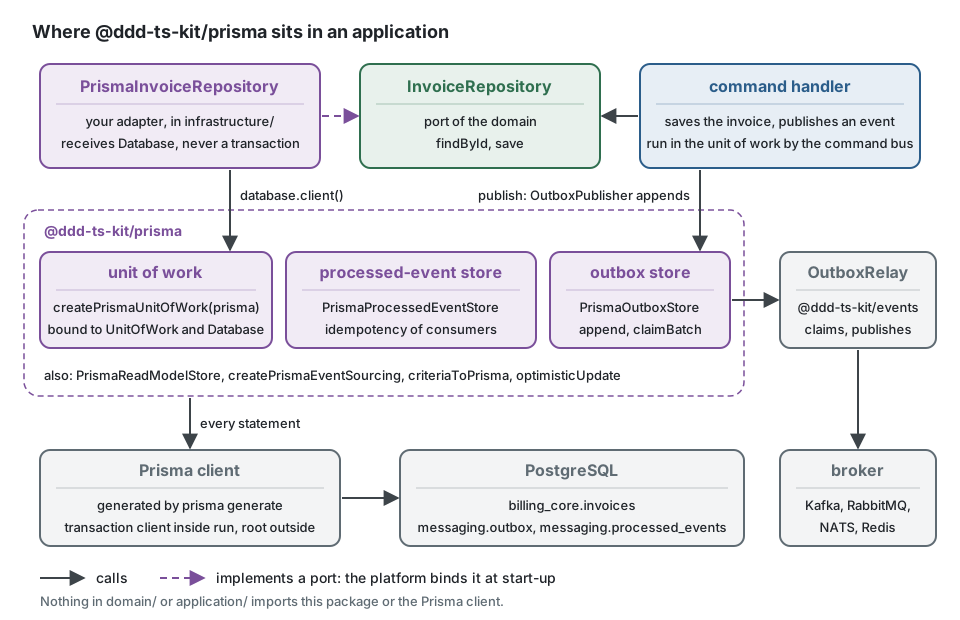
Section titled “Where it sits in an application”Nothing here is imported from domain/ or application/. A handler depends on ports of the
kernel (UnitOfWork, IntegrationEventPublisher) and of its domain (a repository); this
package gives the adapters of the kernel ports, your infrastructure/ writes the adapters of
the domain ports on top of it, and the platform binds them all at start-up.
| Piece | What it provides | Section |
|---|---|---|
createPrismaUnitOfWork(prisma) |
UnitOfWork of the kernel, and the PrismaContext your Database extends |
Composition root |
optimisticUpdate, ConcurrencyError (from the kernel) |
the version guard of your repositories | Repository |
criteriaToPrisma, predicateToPrisma |
the arguments of a findMany for a criteria |
Criteria |
PrismaReadModelStore |
the read model port of a projection (TableReadModelStore) |
Read models |
PrismaOutboxStore |
OutboxStore of @ddd-ts-kit/events |
Outbox and idempotency |
PrismaProcessedEventStore |
ProcessedEventStore of the kernel |
Outbox and idempotency |
createPrismaEventSourcing(context) |
the event store, snapshots, checkpoints and subject keys of the kernel | Event store |
schemaNameOf(context) |
the schema name of a bounded context | Schema |
Schema
Section titled “Schema”Prisma has one schema, yours. The package ships the models to copy into it, one file per provider:
node_modules/@ddd-ts-kit/prisma/prisma/outbox.postgresql.prismanode_modules/@ddd-ts-kit/prisma/prisma/outbox.mysql.prismanode_modules/@ddd-ts-kit/prisma/prisma/outbox.sqlite.prisma// prisma/schema.prisma (PostgreSQL fragment)model OutboxRecord { id String @id sequence BigInt @unique @default(autoincrement()) type String version Int occurredAt String @map("occurred_at") payload Json? traceparent String? correlationId String? @map("correlation_id") status String @default("pending") attempts Int @default(0) nextAttemptAt DateTime @map("next_attempt_at") @db.Timestamptz(3) lastErrorCode String? @map("last_error_code") publishedAt DateTime? @map("published_at") @db.Timestamptz(3) createdAt DateTime @default(now()) @map("created_at") @db.Timestamptz(3)
@@index([status, nextAttemptAt, sequence]) @@map("outbox")}
model ProcessedEvent { consumer String eventId String @map("event_id") processedAt DateTime @default(now()) @map("processed_at") @db.Timestamptz(3)
@@id([consumer, eventId]) @@map("processed_events")}prisma migrate dev then creates the tables in a migration of your project. Keep the field
names, the stores are typed against them; model names, table names and column names are yours.
One schema per bounded context: list the schemas in the datasource, put each model in its own
with @@schema, and give a context that keeps its own outbox a model name of its own.
schemaNameOf('billing-core') gives the name to write, billing_core.
datasource db {  provider = "postgresql"  schemas  = ["messaging", "billing_core"]}
model MessagingOutboxRecord {  // ...the fields above  @@map("outbox")  @@schema("messaging")}
model Invoice {  id      String @id  amount  Int  status  String  version Int
  @@map("invoices")  @@schema("billing_core")}
Contexts never relate to each other's models: no @relation across schemas.
Composition root
Section titled “Composition root”PrismaContext is the client repositories and stores run their queries on. It is generic over
the transaction client of your generated client, so the project names its own database with a
class, which is then the injection token:
import { PrismaContext } from '@ddd-ts-kit/prisma';import type { Prisma } from '$generated/prisma/client';
export abstract class Database extends PrismaContext<Prisma.TransactionClient> {}
createPrismaUnitOfWork(prisma) gives one object that is both the kernel UnitOfWork and
that Database. Bind it to both:
import { PrismaPg } from '@prisma/adapter-pg';import { defineContextModule } from '@ddd-ts-kit/di';import { IntegrationEventPublisher, ProcessedEventStore, UnitOfWork } from '@ddd-ts-kit/kernel';import { OutboxPublisher, OutboxStore } from '@ddd-ts-kit/events';import {  createPrismaUnitOfWork,  PrismaOutboxStore,  PrismaProcessedEventStore,} from '@ddd-ts-kit/prisma';import { PrismaClient } from '$generated/prisma/client';import { Database } from '@/platform/database/database';
const prisma = new PrismaClient({  adapter: new PrismaPg({ connectionString: process.env.DATABASE_URL }),});const unitOfWork = createPrismaUnitOfWork(prisma);const outboxStore = new PrismaOutboxStore(unitOfWork, {  delegate: (client) => client.messagingOutboxRecord,  claim: { strategy: 'skip-locked', dialect: 'postgresql', schema: 'messaging', raw: (client) => client },});
export const persistenceModule = defineContextModule({ name: 'persistence', register(builder) { builder.rebind(UnitOfWork).toValue(unitOfWork); builder.bind(Database).toValue(unitOfWork); builder.bind(OutboxStore).toValue(outboxStore); builder.rebind(ProcessedEventStore).toFactory( (resolve) => new PrismaProcessedEventStore(resolve(Database), { delegate: (client) => client.messagingProcessedEvent }), ); builder.rebind(IntegrationEventPublisher).toClass(OutboxPublisher, [OutboxStore]); },});const app = createApplication({ modules: [kernelModule(), persistenceModule, contextModule('billing', billingDeclarations)] });
const relay = new OutboxRelay({ store: app.resolve(OutboxStore), publisher: broker, clock: app.resolve(Clock) });relay.start({ intervalMs: 500 });List the module after kernelModule(): rebind replaces its in-memory defaults. The command
bus of the kernel module runs every command in the bound UnitOfWork; handlers do not know it.
contextModule of @ddd-ts-kit/di turns the declared classes of a context into its module.
The stores are built here and not by toClass, because both need to be told how to reach
their model. The outbox store takes the unit of work itself, not only the context: its
skip-locked claim opens a short transaction of its own.
A project written by the CLI holds the same wiring in two files:
platform/database/persistence-over.ts builds the unit of work and the two stores once, and
platform/platform.module.ts binds them, the outbox publisher being given to
kernelModule({ eventPublisher }).
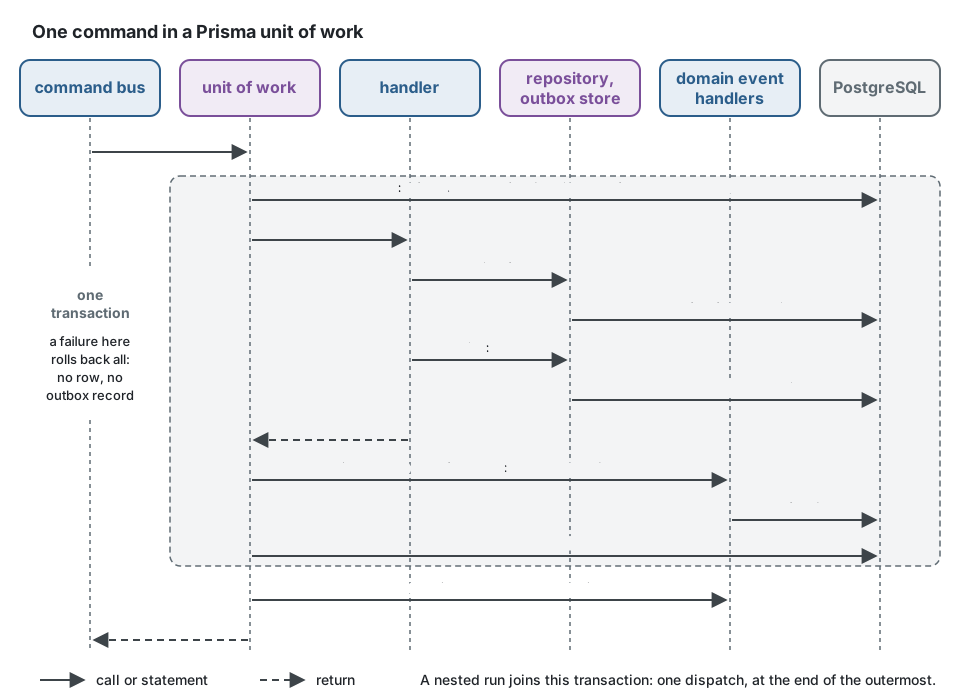
unitOfWork.run(work) opens the interactive prisma.$transaction and keeps the transaction
client in an AsyncLocalStorage; a nested run joins the outer transaction. delegate is a
function of the client because the model must be read on the transaction client inside a unit
of work and on the root client outside. Because append uses the current client, an event
published by a handler that then fails is rolled back with the business write: that is the
whole point of the outbox.
The same two calls, with the publisher bound to the broker or to the outbox, do not give the same guarantee:
import { EventBus, IntegrationEventPublisher, UnitOfWork, type IntegrationEvent } from '@ddd-ts-kit/kernel';
interface Invoice {  issue(): void;}
interface Invoices {  save(invoice: Invoice): Promise<void>;}
declare const unitOfWork: UnitOfWork;declare const invoices: Invoices;
// Instead of: the broker called from the work. The message leaves before the commit: if the// commit then fails, consumers act on an invoice that was never issued, and no rollback takes// the message back.export async function issueAndSend(invoice: Invoice, issued: IntegrationEvent, broker: EventBus): Promise<void> {  await unitOfWork.run(async () => {    invoice.issue();    await invoices.save(invoice);    await broker.publish([issued]);  });}
// Write: the publisher bound to the outbox (OutboxPublisher over PrismaOutboxStore). The// record is a row of the same transaction: it commits with the invoice or disappears with it,// and the relay publishes it once committed.export async function issue(invoice: Invoice, issued: IntegrationEvent, publisher: IntegrationEventPublisher): Promise<void> {  await unitOfWork.run(async () => {    invoice.issue();    await invoices.save(invoice);    await publisher.publish([issued]);  });}
A command handler does not call run itself: the command bus does it, and a declared
integration event handler is run in a unit of work too. A script, or a consumer wired by hand,
calls it as above.
createPrismaUnitOfWork(prisma, { timeout: 15_000, isolationLevel: 'RepeatableRead' })
forwards the options of $transaction.
run is built on withinUnitOfWork of the kernel. The domain events of the aggregates saved
inside it wait until work has returned, then are dispatched inside the transaction, before
the commit: their handlers see every save, and what they write commits or rolls back with it.
If work, a handler or the commit fails, nothing is left: no row, no outbox record, no handler
run after the commit. Handlers declared after-commit run once the transaction has committed.
A nested run joins the unit of work in progress: one dispatch, at the end of the outermost.
A run called directly (a consumer, a script) has the same timing as a command.
unitOfWorkContract of @ddd-ts-kit/testing/contracts proves it, with a deferred constraint
for the commit that fails; on a real PostgreSQL (DDD_TS_KIT_TEST_DATABASE_URL) it also proves
that the rows of a before-commit handler are invisible from another connection and visible
to the after-commit handlers.
The before-commit handlers run inside the time Prisma allows the transaction (timeout).
Repository
Section titled “Repository”The port lives in the domain, the adapter in infrastructure. A repository receives the
database, never a transaction: client() is the transaction client of the unit of work when
there is one and the root client otherwise.
// Instead of: the transaction in the port, which puts Prisma in the domain and makes every// caller carry a transaction it has to get from somewhere.abstract save(invoice: Invoice, transaction: Prisma.TransactionClient): Promise<void>;
// Write: a port of the domain that knows nothing of storage; the adapter asks for the client.abstract save(invoice: Invoice): Promise<void>;import { Repository } from '@ddd-ts-kit/kernel';
export abstract class InvoiceRepository extends Repository<Invoice> {}import type { AggregateRoot } from '@ddd-ts-kit/kernel';import { Repository } from '@ddd-ts-kit/kernel/declarations';import { optimisticUpdate, PrismaContext } from '@ddd-ts-kit/prisma';
@Repository(InvoiceRepository)export class PrismaInvoiceRepository implements InvoiceRepository { constructor(private readonly database: Database) {}
async findById(id: string): Promise<Invoice | undefined> { // Inside a unit of work: the transaction client. Outside: the root client. const row = await this.database.client().invoice.findUnique({ where: { id } });
if (row === null) { return undefined; }
const invoice = InvoiceMapper.toDomain(row); invoice.version = row.version;
return invoice; }
async save(invoice: Invoice): Promise<void> { const invoices = this.database.client().invoice;
await optimisticUpdate(invoice, async ({ expected, next }) => { const row = { ...invoice.state, version: next }; const written = expected === 0 ? await invoices.createMany({ data: [row], skipDuplicates: true }) : await invoices.updateMany({ where: { id: invoice.id, version: expected }, data: row });
return written.count; }); }}
// What the project has elsewhere, declared so that this sample compiles alone: the domain,// the mapper, the Database of the platform, and the part of the generated client used here.interface InvoiceState { readonly id: string; readonly amount: number; readonly status: string;}interface InvoiceRow extends InvoiceState { readonly version: number;}declare abstract class Invoice extends AggregateRoot { get state(): InvoiceState;}declare abstract class InvoiceRepository { abstract findById(id: string): Promise<Invoice | undefined>; abstract save(invoice: Invoice): Promise<void>;}declare const InvoiceMapper: { toDomain(row: InvoiceRow): Invoice };interface TransactionClient { readonly invoice: { findUnique(args: { where: { id: string } }): Promise<InvoiceRow | null>; createMany(args: { data: InvoiceRow[]; skipDuplicates: boolean }): Promise<{ count: number }>; updateMany(args: { where: { id: string; version: number }; data: InvoiceRow }): Promise<{ count: number }>; };}declare abstract class Database extends PrismaContext<TransactionClient> {}In the explicit style, without the decorator, the same binding is one line of
<context>.module.ts:
builder.bind(InvoiceRepository).toClass(PrismaInvoiceRepository, [Database]).
Prisma.TransactionClient is the type of client() for a plain client. An extended client
(prisma.$extends(...)) has a transaction client type of its own, which Prisma does not make
assignable to it: declare Database as PrismaContext<PrismaTransactionClient<typeof prisma>>
instead.
optimisticUpdate gives the version to expect and the version to write, raises a
ConcurrencyError (a DomainError with code CONCURRENCY_CONFLICT) when the guarded
statement wrote no row, and moves invoice.version on otherwise. Use createMany and
updateMany for the guarded write: they return a count, where create and update throw,
and a thrown unique violation aborts the surrounding PostgreSQL transaction. upsert cannot
carry the version guard.
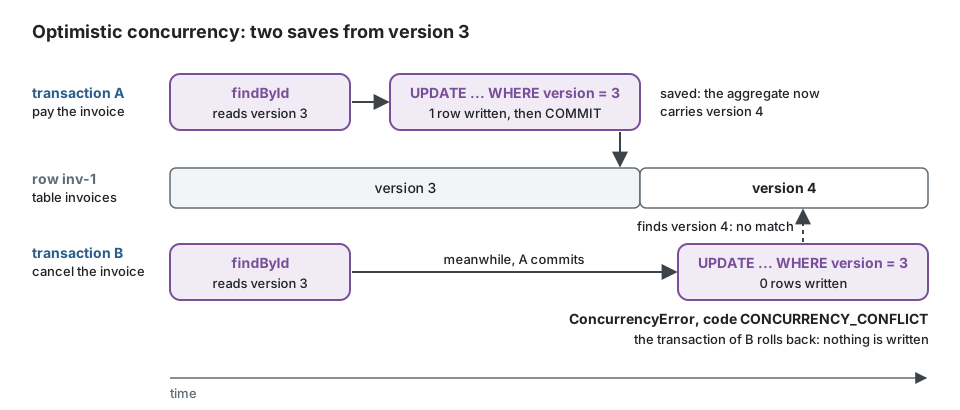
A ConcurrencyError is an expected outcome, not a bug: the command can be retried on a fresh
load, or the caller told that someone else changed the invoice.
import { CONCURRENCY_CONFLICT, ConcurrencyError, optimisticUpdate } from '@ddd-ts-kit/prisma';
interface Invoice {  readonly id: string;  version: number;}
declare function updateWhereVersion(invoice: Invoice, expected: number, next: number): Promise<{ count: number }>;
export async function saveOrReport(invoice: Invoice): Promise<'saved' | 'changed meanwhile'> {  try {    // Loaded at version 3: UPDATE ... WHERE id = $1 AND version = 3, writing version 4.    await optimisticUpdate(invoice, async ({ expected, next }) => {      const written = await updateWhereVersion(invoice, expected, next);
      return written.count;    });
    return 'saved'; // invoice.version is 4 now  } catch (error) {    if (error instanceof ConcurrencyError && error.code === CONCURRENCY_CONFLICT) {      return 'changed meanwhile'; // no row matched version 3; invoice.version is still 3    }
    throw error;  }}
Audit columns, tenant scoping and pages
Section titled “Audit columns, tenant scoping and pages”The standard persistence shapes of the kernel, on Prisma. A Prisma schema has no way to share
fields between models, so there is no helper to import here: copy the five fields. Keep their
names, which are those of the kernel AuditStamp and TenantScoped, so a stamp spreads into
data as it is; and keep the mapped column names (created_at, created_by, updated_at,
updated_by, tenant_id), the same in every project, which is what lets a dashboard, an
export or the audit package be written once.
model Invoice {  id        String   @id  amount    Int  status    String  version   Int  tenantId  String   @map("tenant_id")  createdAt DateTime @map("created_at") @db.Timestamptz(3)  createdBy String   @map("created_by")  updatedAt DateTime @map("updated_at") @db.Timestamptz(3)  updatedBy String   @map("updated_by")
  @@index([tenantId, amount, id], map: "invoices_tenant_amount_idx")  @@map("invoices")  @@schema("billing_core")}
No @default(now()) and no @updatedAt on them: the instant is the one of the Clock, and
Prisma's own attributes know nothing of who acts.
import { Clock, ExecutionScope, stampCreation, stampUpdate, tenantScopeOf } from '@ddd-ts-kit/kernel';import { Repository } from '@ddd-ts-kit/kernel/declarations';
@Repository(InvoiceRepository)export class PrismaInvoiceRepository implements InvoiceRepository {  constructor(    private readonly database: Database,    private readonly scope: ExecutionScope,    private readonly clock: Clock,  ) {}
  async findById(id: string): Promise<Invoice | undefined> {    // findFirst, not findUnique: the tenant is part of every condition, and it is not part of the key.    const row = await this.database.client().invoice.findFirst({ where: { id, ...tenantScopeOf(this.scope) } });
    return row === null ? undefined : InvoiceMapper.toDomain(row);  }
  async save(invoice: Invoice): Promise<void> {    await optimisticUpdate(invoice, async ({ expected, next }) => {      const state = { ...InvoiceMapper.toRow(invoice), version: next };      const written = expected === 0 ? await this.insert(state) : await this.update(state, expected);
      return written.count;    });  }
  private insert(state: VersionedInvoice): Promise<Prisma.BatchPayload> {    const row = { ...state, ...tenantScopeOf(this.scope), ...stampCreation(this.scope, this.clock) };
    return this.database.client().invoice.createMany({ data: [row], skipDuplicates: true });  }
  private update(state: VersionedInvoice, expected: number): Promise<Prisma.BatchPayload> {    return this.database.client().invoice.updateMany({      where: { id: state.id, version: expected, ...tenantScopeOf(this.scope) },      data: { ...state, ...stampUpdate(this.scope, this.clock) },    });  }}
A search query takes the kernel PageRequest and answers a Page, in both variants:
export abstract class InvoiceQueries { abstract search(request: PageRequest<'amount'>): Promise<Page<InvoiceSummary>>;}import { ExecutionScope, encodeCursor, pageOf, tenantScopeOf } from '@ddd-ts-kit/kernel';import { Repository } from '@ddd-ts-kit/kernel/declarations';
@Repository(InvoiceQueries)export class PrismaInvoiceQueries implements InvoiceQueries { constructor( private readonly database: Database, private readonly scope: ExecutionScope, ) {}
async search(request: PageRequest<'amount'>): Promise<Page<InvoiceSummary>> { return request.kind === 'offset' ? this.byOffset(request) : this.byCursor(request); }
private async byOffset(request: OffsetPageRequest<'amount'>): Promise<Page<InvoiceSummary>> { const { invoice } = this.database.client(); const where = tenantScopeOf(this.scope); const rows = await invoice.findMany({ where, orderBy: totalOrder(directionOf(request)), take: request.limit, skip: request.offset, });
return pageOf(rows.map(toSummary), { total: await invoice.count({ where }) }); }
private async byCursor(request: CursorPageRequest<'amount'>): Promise<Page<InvoiceSummary>> { const direction = directionOf(request); const tenant = tenantScopeOf(this.scope); const rows = await this.database.client().invoice.findMany({ where: request.cursor === undefined ? tenant : beyond(positionOf(request.cursor), direction, tenant), orderBy: totalOrder(direction), take: request.limit + 1, }); const items = rows.slice(0, request.limit); const last = items.at(-1); const more = rows.length > request.limit && last !== undefined;
return pageOf(items.map(toSummary), more ? { nextCursor: encodeCursor({ amount: last.amount, id: last.id }) } : {}); }}
const directionOf = (request: PageRequest<'amount'>) => request.sort[0]?.direction ?? 'asc';
// The primary key follows the sort field, in the same direction: the order is total.const totalOrder = (direction: SortDirection): Prisma.InvoiceOrderByWithRelationInput[] => [ { amount: direction }, { id: direction },];
// The rows after a position, as a tuple comparison: the tie-breaker decides among equals.function beyond( { amount, id }: { amount: number; id: string }, direction: SortDirection, tenant: TenantScoped,): Prisma.InvoiceWhereInput { const past = direction === 'asc' ? 'gt' : 'lt';
return { ...tenant, OR: [{ amount: { [past]: amount } }, { amount, id: { [past]: id } }] };}positionOf(cursor) decodes with decodeCursor and checks that amount is a number and id
a string, raising InvalidPageRequestError otherwise. Prisma's own cursor option is not used:
it names a row by a unique field, where a position compares values and needs no row to still
exist.
A read adapter over the database is declared with @Repository, as the ones the CLI
generates: its kind is repository. Declared with @Adapter it would be external, and a
generated platform puts a retry and a time limit around every external and gateway
adapter, which a statement of the unit of work must not get.
The rules these examples hold, and that the tests of this package check on a real database:
- Audit columns are filled by the adapter, never by the aggregate:
stampCreation(scope, clock)on insert,stampUpdate(scope, clock)on update, which leavescreated_atandcreated_byalone. The actor is the one of the execution scope: the user of the request, orsystem:<consumer>for a consumed event. - The tenant is part of every statement: written on insert, and in the condition of every
read and every update, the version guard included. A row of another tenant is not found, and
an update aimed at it writes nothing, which
optimisticUpdatereports as aConcurrencyError. Work that names no tenant raisesNoCurrentTenantErrorbefore any SQL. - A list has a total order. The primary key follows the sort field, in the same direction,
as a tie-breaker: rows equal on the sort field otherwise have no defined order, and a page
could repeat or skip one of them. The index covers
(tenant_id, <sort field>, id). - A cursor is a position, not a page number: the sort value and the id of the last row,
written by
encodeCursor, compared as a tuple (`amount > :amount OR (amount = :amount AND id:id)
). One row more thanlimitis fetched to know whether a page follows, so no count is needed, and a row inserted before the cursor does not shift the next page as it does with an offset. A cursor comes back from a client:decodeCursor` refuses what it did not write, and the adapter checks the types of the position before they reach a statement. - An offset page answers
total, a cursor pagenextCursor. Offer the offset form for small, browsable lists and the cursor form for anything that grows.
Criteria
Section titled “Criteria”criteriaToPrisma(plan, fields?) turns a criteria plan of the kernel into the arguments of a
findMany: where (the filters, the scope of the actor and the keyset of a cursor page),
counted (the filters and the scope alone, for a count), orderBy (the total order ended
by the tie-breaker), take and skip. predicateToPrisma(predicate, fields?) gives one
where. They are data, never text: Prisma binds every value. The fields of the read model
are the fields of the model; fields renames those that differ. The text of contains and
startsWith has its %, _ and \ escaped, which Prisma does not do.
async search(criteria: ScopedCriteria<AppointmentRow>): Promise<Page<AppointmentRow>> {  const plan = planCriteria(appointmentCriteria, criteria);
  if (plan.empty) {    return pageOfPlan(plan, []);  }
  const { where, orderBy, take, skip } = criteriaToPrisma(plan);
  return pageOfPlan(plan, await this.database.client().appointmentRow.findMany({ where, orderBy, take, skip }));}
A cursor page is fetched one row longer than asked, which is how pageOfPlan knows whether
another follows; an offset page takes its total from count({ where: counted }). A field
declared nullable is ordered { sort, nulls }: last ascending, first descending.
What Prisma receives, for the second page of the booked appointments, after a first page that
ended on the appointment a2 at 10:00:
import { Criteria, cursorPage, defineCriteria, planCriteria } from '@ddd-ts-kit/kernel';import { criteriaToPrisma } from '@ddd-ts-kit/prisma';
interface AppointmentRow {  readonly id: string;  readonly status: string;  readonly startsAt: Date;}
const appointmentCriteria = defineCriteria<AppointmentRow>({  fields: {    id: { type: 'string' },    status: { type: 'string', filter: ['eq', 'in'], sortable: true },    startsAt: { type: 'instant', filter: ['gte', 'lt', 'between'], sortable: true },  },  defaultSort: [{ field: 'startsAt', direction: 'asc' }],  tieBreaker: 'id',});
// The nextCursor of the first page: the position { startsAt: '2026-10-13T10:00:00.000Z', id: 'a2' }.declare const nextCursor: string;
const plan = planCriteria(  appointmentCriteria,  Criteria.of<AppointmentRow>().where('status', 'eq', 'booked').page(cursorPage({ limit: 20, cursor: nextCursor })),);
export const { where, counted, orderBy, take, skip } = criteriaToPrisma(plan);// where:   { AND: [//            { status: { equals: 'booked' } },//            { OR: [//              { startsAt: { gt: new Date('2026-10-13T10:00:00.000Z') } },//              { AND: [{ startsAt: { equals: new Date('2026-10-13T10:00:00.000Z') } }, { id: { gt: 'a2' } }] },//            ] },//          ] }// counted: { status: { equals: 'booked' } }, what an offset page would count// orderBy: [{ startsAt: 'asc' }, { id: 'asc' }], the tie-breaker last: a total order// take:    21, one row more than the page, to know whether another follows// skip:    0
Strings. A text column is ordered and compared by range in the collation of the column;
criteria order strings by code point. Declare the text columns that are sorted or compared
with gt, lt or between with COLLATE "C", in the migration since the Prisma schema cannot say it (ALTER TABLE ... ALTER COLUMN room TYPE text COLLATE "C"): the index then serves the sort, and the
order is the same as in the fake. Decimals are a Decimal field and a string in the row: the store reads them back as
plain digits, without trailing zeros or exponent. Instants are timestamptz and a Date.
A BigInt field reads back as a number.
Read models
Section titled “Read models”The model of a read model is yours; prisma/read-model.postgresql.prisma of this package is
the template, with the four fields that order the events of a projection.
model AppointmentRow {  id               String   @id  status           String  startsAt         DateTime @map("starts_at") @db.Timestamptz(3)  lastEventId      String   @map("last_event_id")  lastEventAt      DateTime @map("last_event_at") @db.Timestamptz(3)  lastEventVersion BigInt?  @map("last_event_version")  deleted          Boolean  @default(false)
@@map("appointment_list") @@schema("scheduling")}@Repository(AppointmentList)export class PrismaAppointmentList extends PrismaReadModelStore<AppointmentRow, Prisma.TransactionClient> implements AppointmentList { constructor(database: Database) { super(database, { delegate: (client) => client.appointmentRow, schema: 'scheduling', table: 'appointment_list', columns: { id: 'id', status: 'status', startsAt: 'starts_at' }, definition: appointmentCriteria, }); }}Every write goes through TableReadModelStore of the kernel: a row is written only if its
event is newer than the one it holds, on the executor of the unit of work, so the row and the
processed-event mark commit together. A removed row stays in the table with deleted set:
a query of your own on the table leaves those rows out, and so does a unique index
(WHERE NOT deleted). store.table is what ProjectionRebuild takes; the rebuild is
PostgreSQL only (a copy <table>__rebuild made LIKE ... INCLUDING ALL, the keys written
meanwhile in <table>__touched, the swap by rename in one transaction) and its guarantees
and limits are in the README of @ddd-ts-kit/kernel ("Rebuild"). The store passes
criteriaContract and readModelStoreContract of @ddd-ts-kit/testing/contracts, on PGlite
and on PostgreSQL 18.
Criteria and read models were never run on MySQL or SQLite.
The table is reached through its model, and the copy of a rebuild, which has no model,
through $queryRawUnsafe with quoted identifiers and $n parameters: that is why the table,
the schema and the column of each field are named. The arguments given to the model are built
from the fields of the row at run time, so PrismaReadModelDelegate types them as objects and
it is the generated client that validates them.
Outbox and idempotency
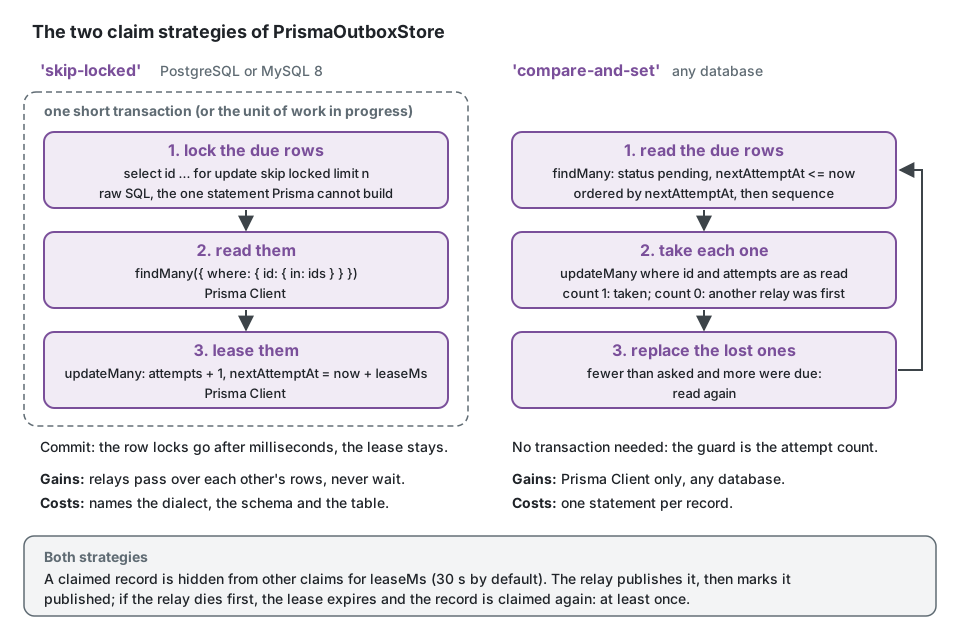
Section titled “Outbox and idempotency”claim is required, because a Prisma client does not tell which database it talks to:
{ strategy: 'skip-locked', dialect, raw, schema?, table? }selects the due rowsFOR UPDATE SKIP LOCKEDand leases them in the same short transaction by pushingnextAttemptAtforward (leaseMs, default 30 s), so several relays share the work without waiting for each other, and the records of a relay that died come back when the lease expires. Needs PostgreSQL or MySQL 8. Prisma Client has no row-locking API, so this one select is raw SQL sent with$queryRawUnsafe(raw: (client) => clienthands the store that method);schemaandtableare the real names of the table and must be plain identifiers. Everything else, the update included, is Prisma Client.'compare-and-set'reads the due rows and takes each one with anupdateManyguarded by the attempt count it read: same guarantee, no raw SQL, any database, one statement per record.
import {  createPrismaUnitOfWork,  PrismaOutboxStore,  PrismaProcessedEventStore,  type PrismaOutboxDelegate,  type PrismaProcessedEventDelegate,  type PrismaRawQueries,} from '@ddd-ts-kit/prisma';
// Stands for the client `prisma generate` writes, reduced to what the stores call: the models// of the shipped fragment, renamed MessagingOutboxRecord and MessagingProcessedEvent here.interface TransactionClient extends PrismaRawQueries {  readonly messagingOutboxRecord: PrismaOutboxDelegate;  readonly messagingProcessedEvent: PrismaProcessedEventDelegate;}declare const prisma: TransactionClient & {  $transaction<R>(work: (transaction: TransactionClient) => Promise<R>, options?: { timeout?: number }): Promise<R>;};
const unitOfWork = createPrismaUnitOfWork(prisma);
// PostgreSQL or MySQL 8: one raw select per batch, relays never wait for each other.export const outbox = new PrismaOutboxStore(unitOfWork, {  delegate: (client) => client.messagingOutboxRecord,  claim: { strategy: 'skip-locked', dialect: 'postgresql', schema: 'messaging', table: 'outbox', raw: (client) => client },  leaseMs: 60_000, // longer than the slowest publication of a batch});
// Any database, Prisma Client only: one updateMany per claimed record.export const portableOutbox = new PrismaOutboxStore(unitOfWork, {  delegate: (client) => client.messagingOutboxRecord,  claim: 'compare-and-set',});
export const processedEvents = new PrismaProcessedEventStore(unitOfWork, {  delegate: (client) => client.messagingProcessedEvent,});
PrismaProcessedEventStore.markProcessed is createMany({ skipDuplicates: true }). Run the
consumer inside the unit of work: the mark then commits with the effects of the handler, and
disappears with them if it fails. A declared @IntegrationEventHandler, or consume of
@ddd-ts-kit/events, does exactly this; by hand it reads:
import type { IntegrationEvent, ProcessedEventStore, UnitOfWork } from '@ddd-ts-kit/kernel';
declare const unitOfWork: UnitOfWork;declare const processedEvents: ProcessedEventStore;declare function issueInvoiceFor(event: IntegrationEvent): Promise<void>;
const consumer = 'billing.invoice-on-order-placed';
// Instead of: act first, then remember. A crash in between, or a redelivery while the first// delivery is still running, issues the invoice twice.export async function onOrderPlacedTwice(event: IntegrationEvent): Promise<void> {  await issueInvoiceFor(event);  await processedEvents.markProcessed(consumer, event.id);}
// Write: the mark and the effects in one unit of work. The mark answers false for an event// already handled; if the handler fails, the mark is rolled back and the redelivery runs.export async function onOrderPlaced(event: IntegrationEvent): Promise<void> {  await unitOfWork.run(async () => {    if (!(await processedEvents.markProcessed(consumer, event.id))) {      return;    }
    await issueInvoiceFor(event);  });}
Delivery is at least once, unordered.
Event store
Section titled “Event store”Copy the models of prisma/event-store.postgresql.prisma into the schema; prisma migrate dev
creates the tables. Keep their table and column names: the stores run raw statements on them.
const { events, snapshots, checkpoints, subjectKeys } = createPrismaEventSourcing(unitOfWork);A context that keeps its event store in a schema of its own adds @@schema("<context>") to
the copies, gives them model names of their own, and passes { schema: '<context>' }.
Each statement runs on the executor of the context: an append joins the transaction of the
unit of work, so the stream and the outbox records its events publish commit together
(eventStoreUnitOfWorkContract). Appends take the head of the store, a row locked until their
transaction ends: positions are given in commit order, without gaps, and two appends never run
side by side, whatever their streams. PostgreSQL only. The stores are the ones of the kernel
(PostgresEventStore and its companions), held to eventStoreContract here; how an
event-sourced aggregate uses them: the README of @ddd-ts-kit/kernel, section "Event sourcing".
Dialect coverage
Section titled “Dialect coverage”What follows is about this package. The CLI generates for PostgreSQL only: init --orm prisma
refuses --database mysql and --database sqlite.
| Database | Status |
|---|---|
| PostgreSQL | Covered by the automated suite, through @prisma/adapter-pg: contract suites of @ddd-ts-kit/testing, repository contract, rollback, nested unit of work, concurrent claims, both claim strategies. It runs on PGlite served over the PostgreSQL wire protocol by default, and on a real server when DDD_TS_KIT_TEST_DATABASE_URL is set (last run: PostgreSQL 18). |
| MySQL 8 | Not in the automated suite. The fragment is validated by prisma validate; the outbox and processed-event contract suites and the rollback of append were run once by hand against MySQL 8.4 through @prisma/adapter-mariadb, with skip-locked and compare-and-set. |
| SQLite | Not in the automated suite. The fragment is validated by prisma validate; the outbox contract suite was run once by hand through @prisma/adapter-better-sqlite3 with compare-and-set, the only claim available there. The processed-event store needs the delegate shown under Limits. |
| CockroachDB, SQL Server, MongoDB | Never run. |
Limits
Section titled “Limits”What Prisma does not allow, and what the package does about it:
-
No row locking in Prisma Client.
FOR UPDATE SKIP LOCKEDexists only as raw SQL, hence theskip-lockedoption that names the dialect and the table, and thecompare-and-setalternative that stays inside Prisma Client. -
Nesting is not portable. A Prisma 7 transaction client can open a nested
$transaction(a savepoint), a Prisma 6 one cannot. The package uses neither: a nestedrunjoins the outer transaction, andclaimBatchcalled inside a unit of work claims in that unit of work. -
Interactive transactions are bounded in time: 5 seconds by default, then Prisma rolls back. Pass
timeouttocreatePrismaUnitOfWorkfor long commands. They also hold a connection for their whole duration. -
A bare
nullis refused in aJsonfield, and the sentinels that express it live in the generated client. The stores leave anullpayload out, so it is stored as SQLNULLand read back asnull; the field is thereforeJson?. -
No partial index in the schema language. The fragment declares a plain index on
(status, nextAttemptAt, sequence). On PostgreSQL you may replace it by hand in the migration with(next_attempt_at, sequence) WHERE status = 'pending'. -
No
createMany({ skipDuplicates })on SQLite, SQL Server and MongoDB. There the model does not fitPrismaProcessedEventDelegate; give the store a delegate that maps the unique violation, which SQLite tolerates inside a transaction:new PrismaProcessedEventStore(unitOfWork, {delegate: (client) => ({createMany: async ({ data }) => {let count = 0;for (const row of data) {try {await client.processedEvent.create({ data: row });count += 1;} catch (error) {if (!(error instanceof Prisma.PrismaClientKnownRequestError && error.code === 'P2002')) {throw error;}}}return { count };},}),}); -
The store cannot see the database provider, so nothing is chosen for you:
claimis required. -
Tested with Prisma 7.10 and its driver adapters. The peer range is Prisma 7 (
@prisma/client^7.0.0). -
stats()is threecountqueries, not one statement: the numbers of a busy outbox may not add up to the same instant.
Testing an adapter
Section titled “Testing an adapter”The unit of work of this package passes unitOfWorkContract, and its stores
outboxStoreContract and processedEventStoreContract, of @ddd-ts-kit/testing/contracts. Hold your repositories to repositoryContract the same way,
next to their in-memory fake. The tests of this package need no container and no manual step:
npx vitest run packages/prismaDDD_TS_KIT_TEST_DATABASE_URL=postgresql://user:password@localhost:5432/postgres npx vitest run packages/prismaThe tests need a generated client. Each spec file first awaits
test/support/generate.ts, which builds a schema from the shipped PostgreSQL fragment (the
models as they are, plus a renamed copy in a messaging schema and the example Invoice),
runs prisma generate and prisma migrate diff into test/generated/ (git-ignored), and
skips all of it when that directory is up to date. The suites themselves live in
test/suites/ and import the generated client like application code would.
With the variable set, each spec file creates a database of its own on that server and drops it afterwards, and the tests that need two real connections (a relay passing over rows locked by another one) run instead of being skipped.